

TECHNICAL ARTICLE
TECHNICAL ARTICLE
Palsgaard has developed Palsgaard® AcidMilk 310, a clean-label stabiliser blend to help manufacturers create thermised yoghurts with a clean mouthfeel, a creamy consistency and excellent stability. Theng Theng Sim, Regional Application Manager at Palsgaard Asia-Pacific, explains:
"A lot of producers would like to do shelf-stable yoghurt, but they don’t have the ability to do it yet. We are going to share this technology with customers in several countries and teach them how to produce it."
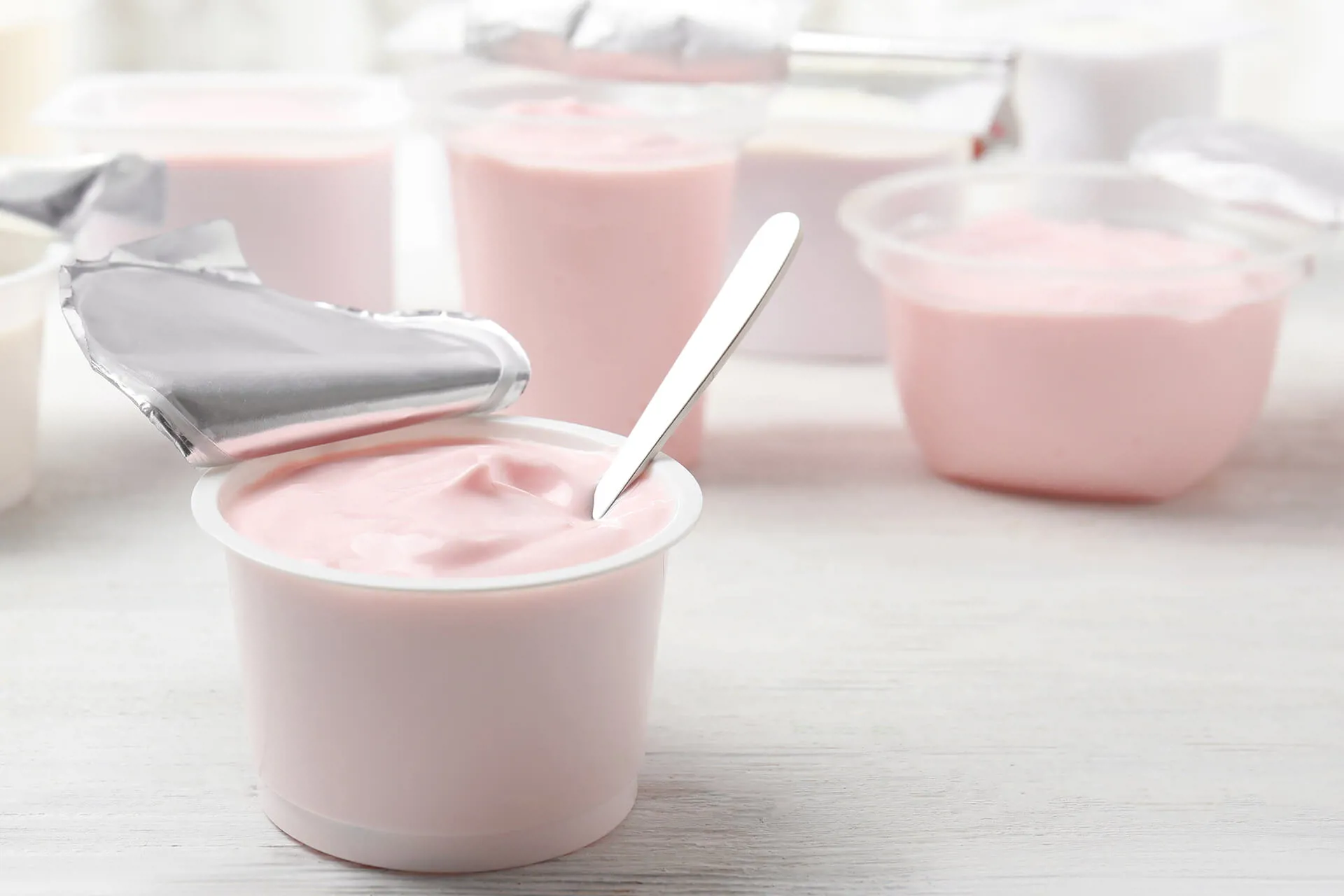
The thermised yoghurt market is still in its early stages and there are plenty of reasons to expect significant growth in the years ahead.
As it can be stored at ambient temperatures, chilled transportation is not required to maintain its quality and texture. It also offers a longer shelf-life than chilled yoghurts but, unlike UHT products, it is heated only at standard pasteurisation temperatures.
“Thermised yoghurt is now well established in China but it’s yet to really take off elsewhere,” Theng Theng Sim, Regional Application Manager at Palsgaard Asia-Pacific, says. “We see a lot of potential, especially in countries with cold-chain distribution challenges. Maybe some manufacturers have thought about shelf-stable yoghurt but haven’t been able to develop the right product.”
Achieving the right mouthfeel and texture is an important part of the challenge of developing a thermised yoghurt product that will appeal to consumers.
“Preferences vary from country to country when it comes to texture, but most want something smooth and glossy with a clean mouthfeel,” she adds. “The main quality issue, though, is always syneresis.”
Syneresis, or serum separation, refers to a shrinkage of the gel as a result of the instability of the gel network, with the structure of the yoghurt becoming so tight that the water is squeezed out.
“It’s very tricky,” she says. “If you use the wrong type of stabiliser or the dosage is too high, the water squeezes out because the structure becomes too tight. If you don’t use a stabiliser, you can’t bind the water so it will squeeze out from the curd.”
Thermised yoghurt also needs to undergo heat treatment and, as a result of the low pH levels, that process can denature the milk protein and cause the product to become curdled or grainy.
Another issue for manufacturers has been developing shelf-stable yoghurts with clean labels, with the commonly used stabilisers requiring E numbers.
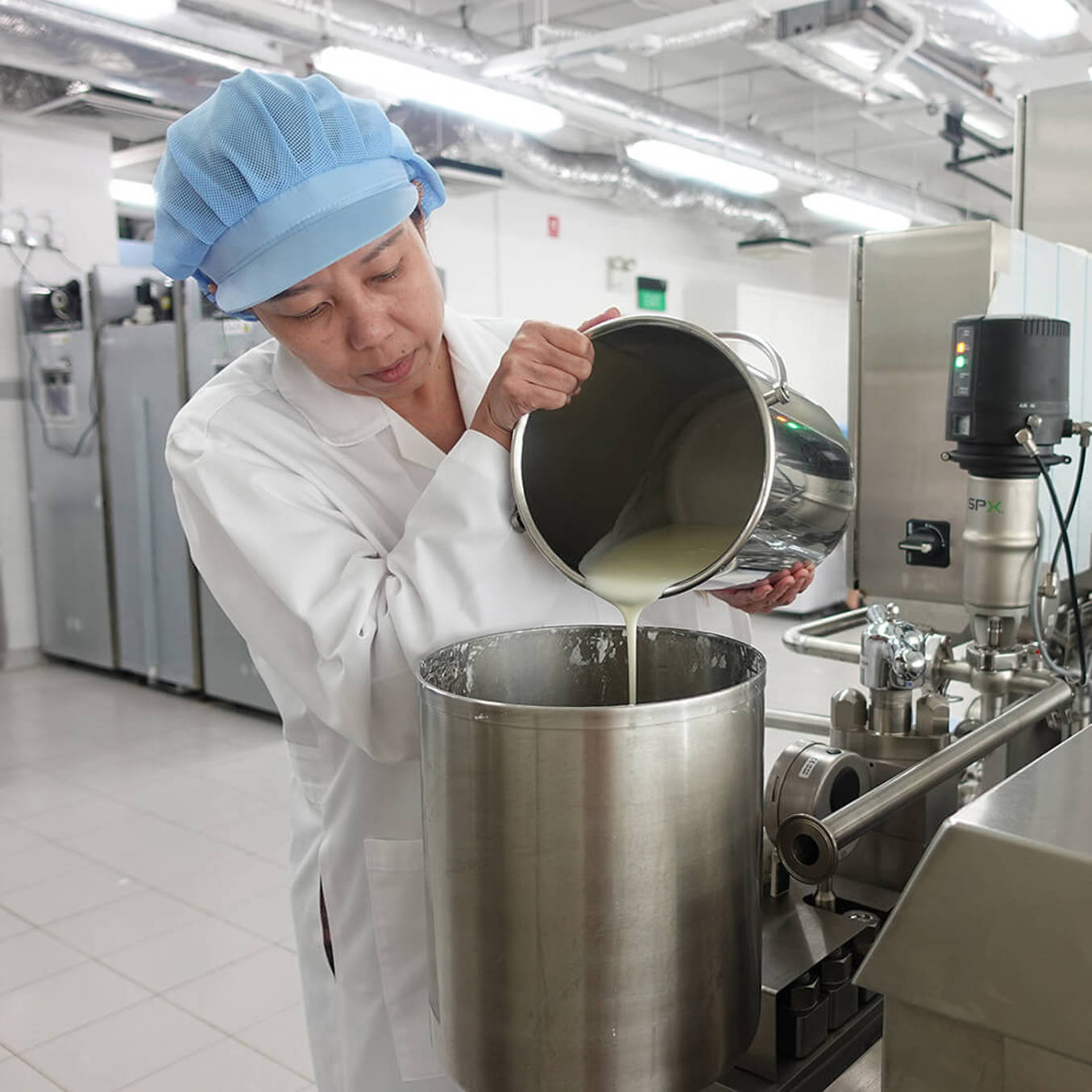
Palsgaard may be best known for its emulsifiers, but the company also has extensive knowledge of stabilisers. Having identified the potential in the thermised yoghurt market, the company set about developing a solution that would address all these challenges.
The result is Palsgaard® AcidMilk 310, a plant-based, Halal-certified stabiliser made from just two ingredients.
“Our Palsgaard® AcidMilk series includes some gelatine-based options and some that are starch-based,” Theng Theng says. “For Palsgaard® AcidMilk 310, we are using a combination of vegetable fibre and starch. In general, the function of starch is to thicken, gel and hold water in the yoghurt. With the wrong choice of starch or the wrong dosage, the yoghurt will become very starchy and sticky. It may also result in grainy yoghurt. The vegetable fibre helps to develop some viscosity and also provides a very clean mouthfeel, but for the starch, we had to be very careful.”
Palsgaard had experimented with various stabiliser blends for shelf-stable yoghurt, including options with more ingredients. However, the company found that the combination of vegetable fibre and starch produced the best results, achieving a clean mouthfeel, creamy consistency, smooth and glossy texture, and excellent stability after heat treatment.
“We tried other options, but we started to see serum separation and we got a grainy texture,” she adds. “Thermised yoghurt presents a new level of challenging technical issues. We really didn’t know whether using vegetable fibre and starch would work, but you never know until you try it. We went through the heat process and wow! It was a nice surprise for us – just two ingredients and no E numbers.”
Palsgaard® AcidMilk 310 also comes at an affordable price.
“People think clean label means a very expensive product,” Theng Theng says. “Actually, Palsgaard® AcidMilk 310 is not a Rolls-Royce price. It’s very cost-effective. Consumers in many countries are looking for clean-label products and you don’t really see that now for thermised yoghurt, so this is something that got us very excited.”
INTRODUCING PALSGAARD® ACIDMILK 310
Made from starch and vegetable fibre, Palsgaard® AcidMilk 310 is developed for use in thermised yoghurt and other fermented milk products. It provides the following advantages:
PRODUCTION PROCESS FOR THERMISED YOGHURT
Designed for use with either fresh or recombined milk, Palsgaard® Acidmilk 310 is suitable for stirred and drinkable yoghurts.
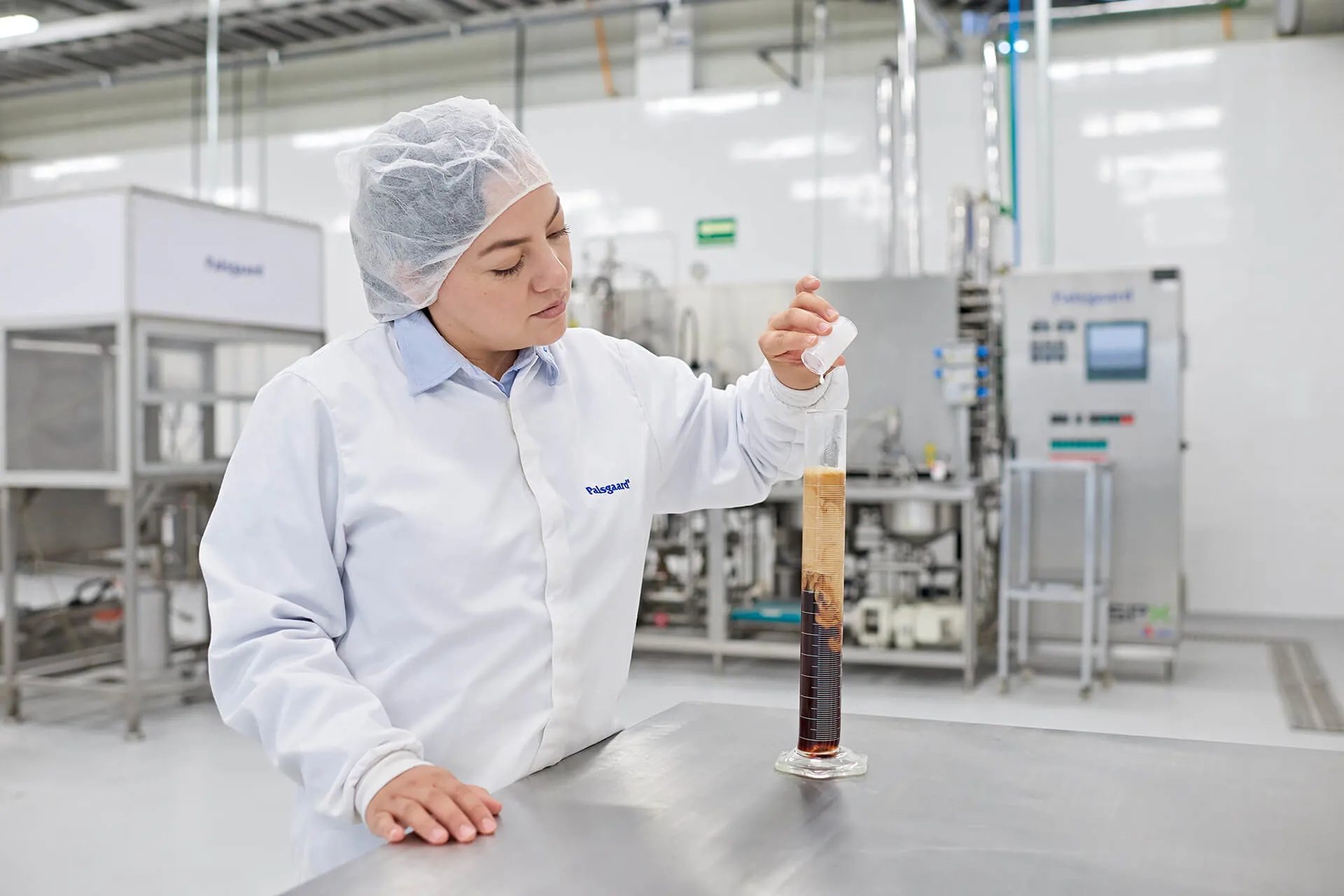
To provide inspiration to customers looking to explore the immune health trend, Palsgaard recently unveiled an acai beetroot drinking yoghurt concept using Palsgaard® AcidMilk 310, which gives it a smooth and creamy texture and a mouthfeel similar to a milkshake.
“As well as helping customers develop new products or perfect existing products, we often create prototype recipes in our six application centres to help spark ideas,” she says. “For this concept, we wanted ingredients that are very nutritious and can help to boost the immune system but that would also blend well with the base. Beetroot and acai berry blend really well and the yoghurt tastes great.”
Palsgaard® AcidMilk 310 also prevents whey separation during distribution and storage as well as providing excellent water-binding properties.
“Drinkable yoghurt is very different to stirred yoghurts,” she says. “The only common issue we see is the serum separation. With drinkable yoghurt, there is more water present so it’s important to minimise sedimentation.”

Regardless of whether manufacturers are looking to produce stirred or drinkable thermised yoghurts, Palsgaard’s experts will work closely with them to ensure they can implement Palsgaard® AcidMilk 310 effectively and get the results they want.
“A lot of producers would like to do shelf-stable yoghurt, but they don’t have the ability to do it yet,” Theng Theng says. “We are going to share this technology with customers in several countries and teach them how to produce it."
The company is now sending out prototype samples to demonstrate the potential of Palsgaard® Acidmilk 310. Without the need for cold-chain distribution and an expected product shelf-life of up to six months, the process has been unusually convenient.
“With normal yoghurt, it’s very difficult to courier because it needs to be kept chilled,” Theng Theng says. “For thermised yoghurt, you don’t have to worry about the storage conditions. That’s very beneficial for manufacturers and we think there is definite potential for expansion in the market. We have had customers interested in thermised products in the past but we didn’t have a solution at the time. Now we do – and it’s really clean label, too.”
There is increased interest in plant-based products including plant-based yoghurt. The good news is that Palsgaard® AcidMilk 310 works not only in dairy-based yoghurt but works equally well in plant-based yoghurt, offering the same benefits to stirred, drinkable, and thermised plant-based yoghurts.
TECHNICAL ARTICLE

TECHNICAL ARTICLE
TECHNICAL ARTICLE

TECHNICAL ARTICLE

TECHNICAL ARTICLE